
Welcome to our series “Life of a Sheep in Iceland” Part 2, presented by Icelandic Lamb and Íslenskt Lambakjöt. In this series, we follow the life of a sheep in Iceland. Life is a circle, just like the yearly cycle of sheep farming. In our last Blogpost, we introduced you to some sheep-breeding decisions by Icelandic farmers. Such as how they choose rams for their ewes.
One of the most exciting days
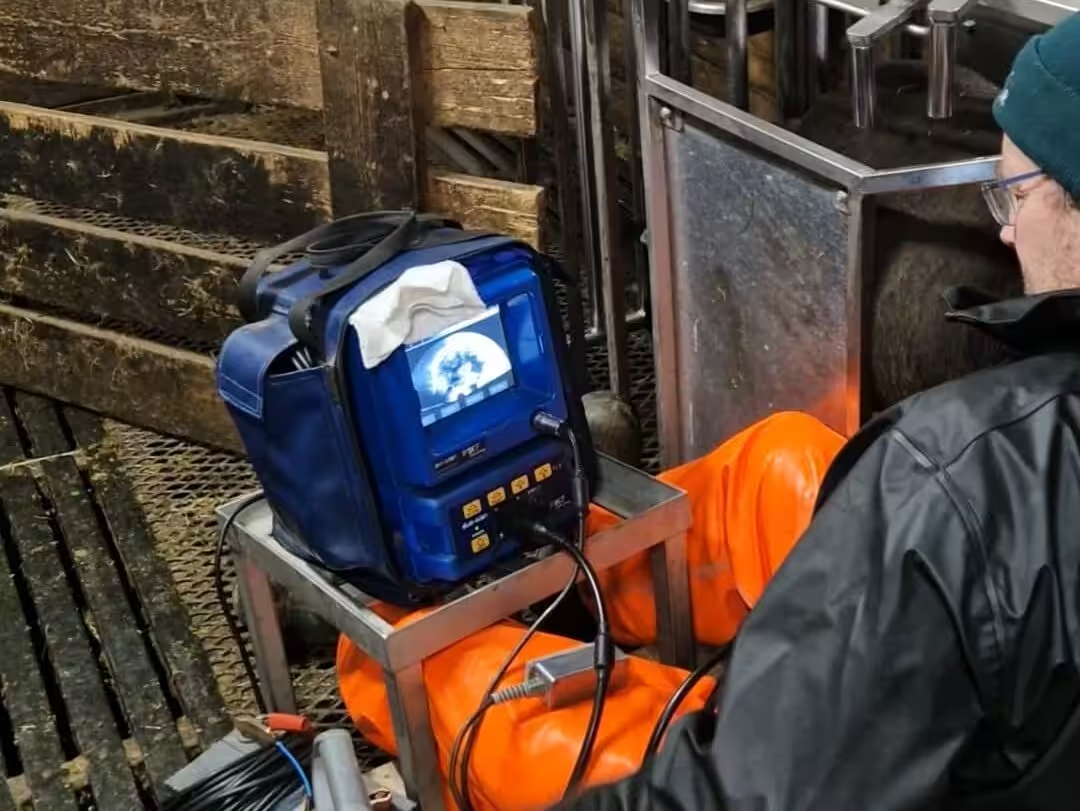
Today, we want to introduce you to one of the most exciting days for many sheep farmers. The day of the ultrasound. Many sheep farmers in Iceland perform ultrasounds on their sheep to determine how many lambs they are carrying. This usually happens in February because the lambs’ embryos are large enough to be seen at that time.
Everyone helps together
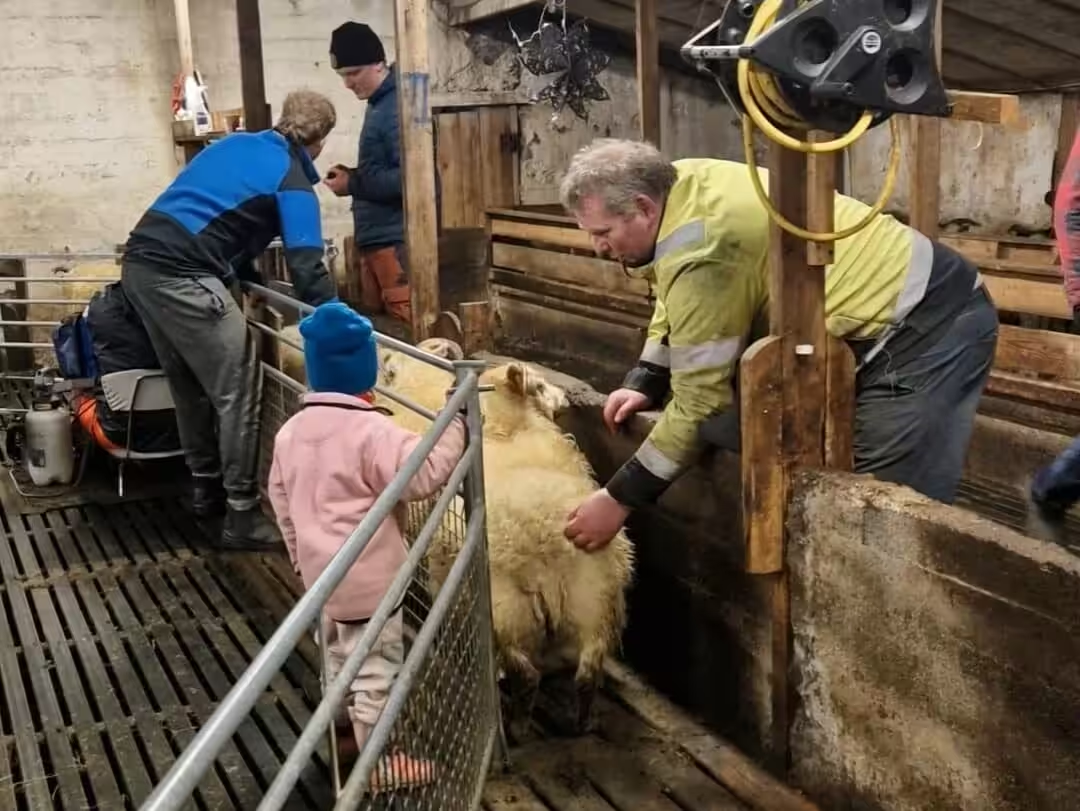
For farmers, it is important to know how many lambs a sheep is carrying so that, during the lambing season, they can try to send each mother sheep with two lambs to the mountains. At events like this, farmers from the area help each other so that as many sheep as possible can be scanned in one day. Even the youngest help.
Why are sheepfarmers doing it?
For the ultrasound, the sheep are fixed one by one in a metal frame so they can be scanned calmly. Depending on how many lambs a sheep is carrying, it is marked with a specific colour or not marked at all. This also helps farmers feed the sheep more individually in the following months of pregnancy, for example, giving sheep with more than two lambs better or more food.
Before the lambing season starts, there is still a lot to do in the sheep barns. If you would like to see how the lives of sheep in Iceland continue throughout the yearly cycle, make sure to follow us on Instagram and Facebook and look forward for the next Blogpost